Guiding the Future of Care: Local Leaders in Nursing Education
Behind every great nurse is a great nursing educator. Before they can take to the field, nursing students must master both the foundation of clinical knowledge and the human side of care – empathy, communication, and compassion. Here, meet the deans of nursing at our area’s colleges and universities and learn what shapes their programs and visions for the next generation of nurses.
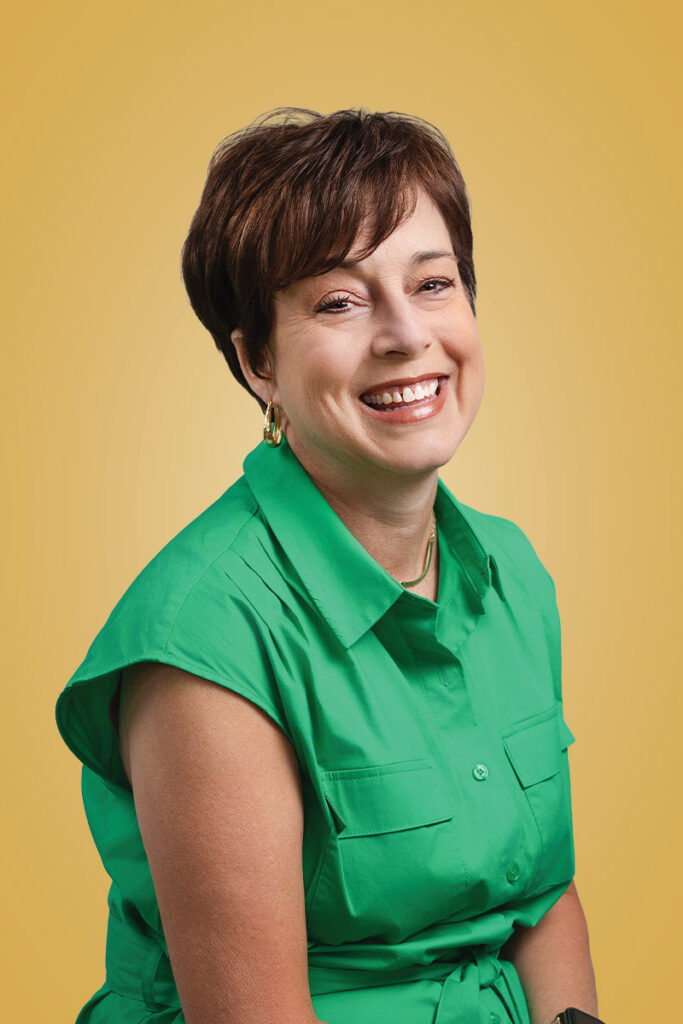
Amy Jo Perry, DNP, MBA, RN-C, CPN
Dean of the School of Nursing, Lee University
After losing a child to congenital heart disease, Amy Jo Perry experienced firsthand how a compassionate, skilled nurse can make a powerful difference even in life’s toughest moments, giving Perry a deep appreciation for how nurses impact both patients and entire families.
“Today, that same perspective fuels my passion for preparing future nurses,” shares Perry. “I want our graduates to be the kind of nurses they would want caring for their own loved ones – clinically excellent, compassionate, and committed to treating every patient with dignity and respect.”
After earning her bachelor’s degree from the University of Michigan, Perry worked full-time as a registered nurse before going back to school at the University of Tennessee at Chattanooga for her Doctor of Nursing Practice. In 2018, she started as an assistant professor of nursing at Lee University before stepping into the role of dean in 2023.
Offering both a Bachelor of Science in Nursing and a Doctor of Nursing Practice, Lee University seeks students who demonstrate strong critical thinking skills alongside a genuine care for others.
“While academic ability is important, qualities like emotional intelligence, resilience, grit, adaptability, and determination are equally essential,” adds Perry. “These characteristics help students succeed in a rigorous nursing program and prepare them to thrive in today’s ever-evolving healthcare environment.”
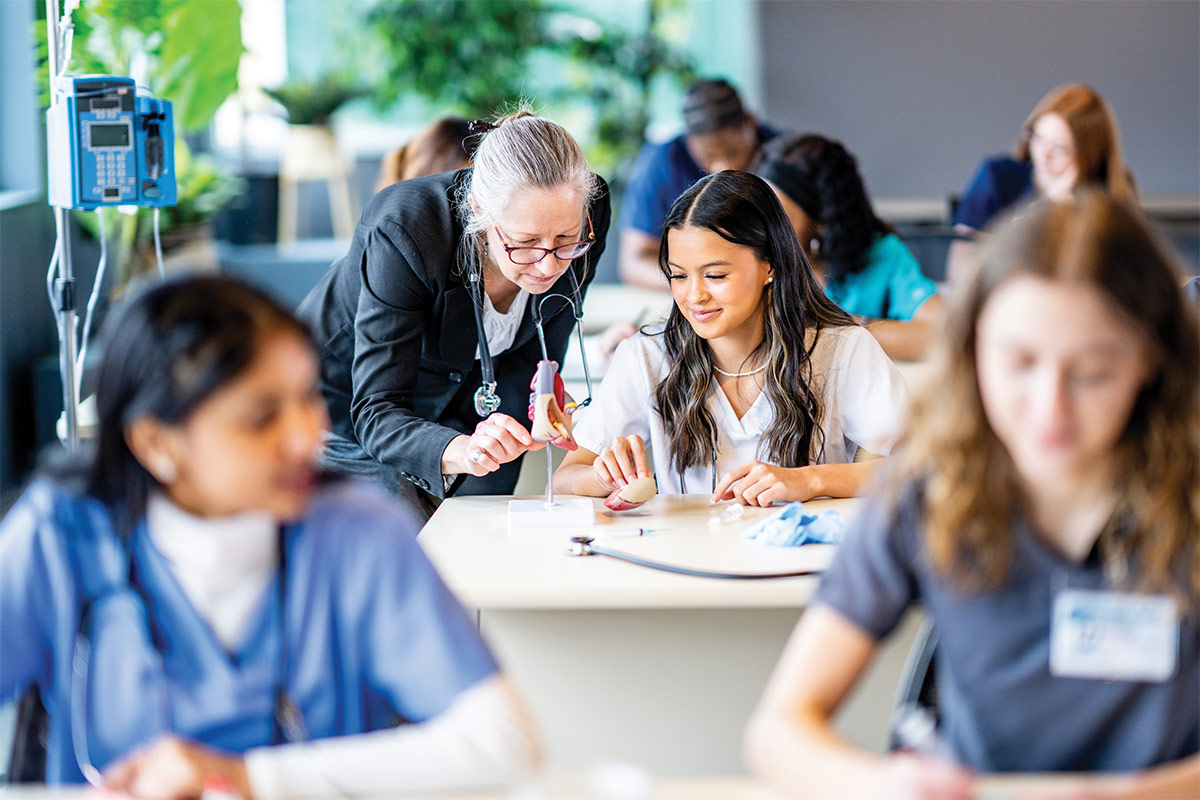
The university’s program integrates simulations, evidence-based practices, and emerging technologies into the curriculum. Opportunities like the senior capstone project encourage students to identify challenges they’ve observed during clinical experiences and develop either a research study or an innovation proposal.
The university also partners with local healthcare organizations to create scholarship opportunities for students who commit to working at their facilities after becoming licensed registered nurses.
“It’s truly a win-win-win: students receive financial support for their education and the assurance of a job after graduation, our healthcare partners build a pipeline of exceptional new nurses, and our program is able to attract talented students who are eager to serve our community,” adds Perry.
Through a combination of hands-on learning and strong community partnerships, Lee University continues to prepare nurses who are equipped to meet the growing demands of healthcare.
“I love my job and am deeply proud of the work our faculty, staff, and clinical partners are doing to prepare the next generation of nurses,” finishes Perry. “It is a privilege to help shape the nurses who will care for our communities in the years ahead.”
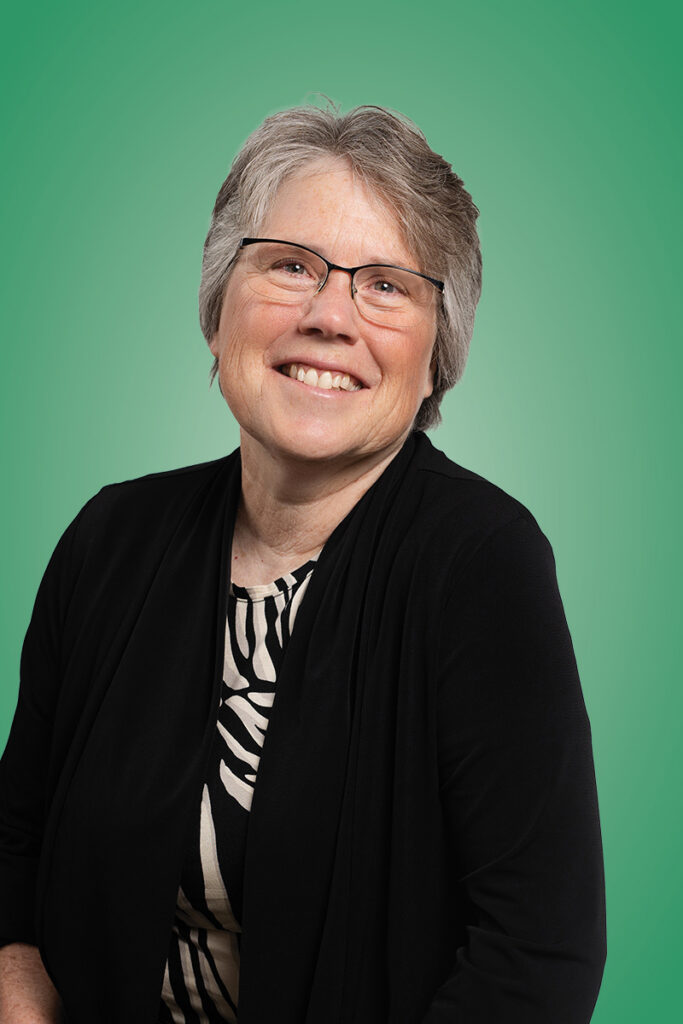
Holly Gadd, PhD, APRN, FNP-BC
Dean of the School of Nursing, Southern Adventist University (SAU)
From as far back as she can remember, Dr. Holly Gadd always wanted to pursue nursing education, earning her master’s degree from Loma Linda University in 1983 and a Doctor of Philosophy in Nursing Practice from Texas Women’s University in 2000.
“I made a personal commitment that as long as I teach,
I also continue to practice, which I do regularly as a family nurse practitioner,” adds Dr. Gadd. “Helping students grow professionally, presenting them with real-world cases to develop their critical thinking, and seeing them thrive in new clinical roles has kept me going in nursing education for over 40 years.”
Dr. Gadd joined SAU in 2000 as a professor and director of nursing graduate studies. Embracing Christ-centered caring, connecting, and empowering, SAU offers associate, bachelor’s, master’s, and doctoral nursing programs with flexible and accelerated learning pathways that continue to evolve.
“In September of 2025, the School of Nursing celebrated the opening of a new state-of-the-art simulation center,” shares Dr. Gadd. “Technology in the simulation center reflects that commonly used in clinical settings where students are likely to work. Students maintain their CPR skills through a Resuscitation Quality Improvement (RQI) program that is computer- and manikin-driven.”
Further supporting local healthcare needs, the School of Nursing has a new graduate-entry RN program under consideration, providing a pathway for individuals seeking a career change to enter the nursing profession. Dr. Gadd is especially proud of the university’s rich resources that promote student success.
“Expert, compassionate professors and support staff are core,” she says.
“A learning management system for each class, diverse electronic resources, regular skills, simulations, and clinical experiences develop students’ competence and confidence. Tutors and group learning sessions are available to augment student classroom and clinical learning.”
For Dr. Gadd, every investment in the School of Nursing ultimately comes back to its students, ensuring they graduate with the knowledge, confidence, and compassion needed to make a lasting impact on the communities they serve.
She finishes: “I hope every graduate leaves with a sense of God’s purpose for their lives and their calling into healthcare – to partner with Him in making a difference wherever they go and whatever their circumstances.”

Martina Harris, EdD, CNE, ANEF
Dean of Nursing and Allied Health, Chattanooga State Community College
Dr. Martina Harris quickly discovered her passion for teaching after serving as a clinical instructor while completing her nursing graduate program at Vanderbilt University over 30 years ago.
“Seeing the excitement, growth, and confidence of students as they developed into future nurses was incredibly rewarding and inspired me to pursue a career in nursing education,” adds Dr. Harris.
In 2013, Dr. Harris joined Chattanooga State Community College as the director of nursing, steadily advancing through the department before stepping into the position of dean of nursing and allied health in 2023. Endorsed by the International Nursing Association for Clinical Simulation and Learning (INACSL), the college’s nursing program continues to evolve through innovative teaching strategies, simulation, and emerging technologies.
“I’m excited about the growth of our simulation program, particularly our efforts to expand interprofessional education (IPE) experiences that allow nursing students to learn and collaborate alongside other healthcare disciplines in realistic patient care scenarios,” says Dr. Harris. “Together, these initiatives strengthen the healthcare workforce pipeline and better prepare graduates to meet the evolving needs of the communities they will serve.”
The college also continues to expand its program offerings, including the Associate of Applied Science in Nursing degree at its Kimball campus, helping address critical nursing workforce shortages in rural communities while opening doors for students who may not otherwise have the opportunity.
“As dean, I hope every graduate leaves our program with a strong sense of pride in the nursing profession and an appreciation for the responsibility and privilege that comes with caring for others,” adds Dr. Harris. “We provide students with the foundational knowledge, skills, and experiences necessary to begin their careers, but ultimately, it is up to them to continue learning, growing, and striving for excellence.”
Dr. Harris is incredibly proud of the college’s nursing faculty as they help shape the next generation of healthcare professionals with dedication, expertise, and commitment to student success.
She closes: “As we continue to educate future nurses, I remain optimistic that the nursing profession will continue to evolve, innovate, and lead while never losing sight of its core mission: providing compassionate, high-quality care to those we serve.”
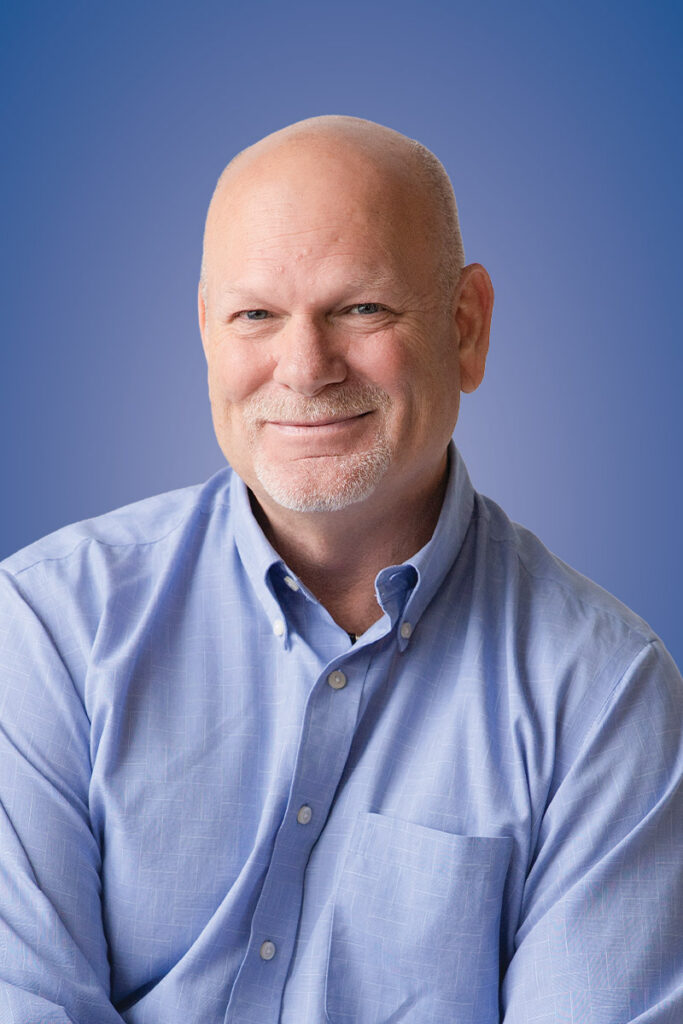
Andrew Kurt Thaw, PhD
Dean of the School of Health Professions, Dalton State College
After serving as a pre-health advisor at his previous institution, Dr. Andrew Kurt Thaw developed a passion for helping students navigate the journey from beginning college to being accepted into their chosen health profession programs.
“It was not just helping students pursue their dreams, it was also helping build the healthcare infrastructure for communities and enabling exceptional healthcare professionals to get out there and start taking care of folks,” adds Dr. Thaw.
With a bachelor’s degree in psychology and a Doctor of Philosophy in Neuroscience, Dr. Thaw brings years of experience to his role as dean at Dalton State College, a position he began in July of 2025. Already, the program is preparing for major growth, including launching a new BSN program and offering summer camps that introduce middle and high school students to healthcare careers.
“Ultimately, all of these initiatives are centered on one goal: increasing the number of well-prepared nurses in our local healthcare ecosystem, encouraging more students to pursue nursing, supporting nurses in becoming educators, and helping ensure that Northwest Georgia and the surrounding region can provide exceptional healthcare for years to come,” adds Dr. Thaw.
With Dalton State located in a close-knit community, partnerships with local healthcare providers offer valuable opportunities for students to gain real clinical experience.
“We actually have monthly meetings with our local hospital to stay abreast of any needs they may have that we can include in our nursing program, and we can share with them any experiences that we would like to see our students receiving,” adds Dr. Thaw. “The healthcare providers also benefit from getting to know our students and being able to match them with available jobs. It truly is a symbiotic relationship.”
In fact, Dr. Thaw shares that many of Dalton State’s graduates go on to practice within 50 miles of the campus, strengthening healthcare access across the region and ensuring skilled nurses are available to serve communities throughout North Georgia.
“With our new BSN program launching this fall, clear pathways to advanced degrees, and new initiatives to bring the next generation into healthcare, the momentum is real, and all we need are students with a passion for healing to join us,” closes Dr. Thaw. “There has never been a more exciting time to be part of what we are building at Dalton State.”
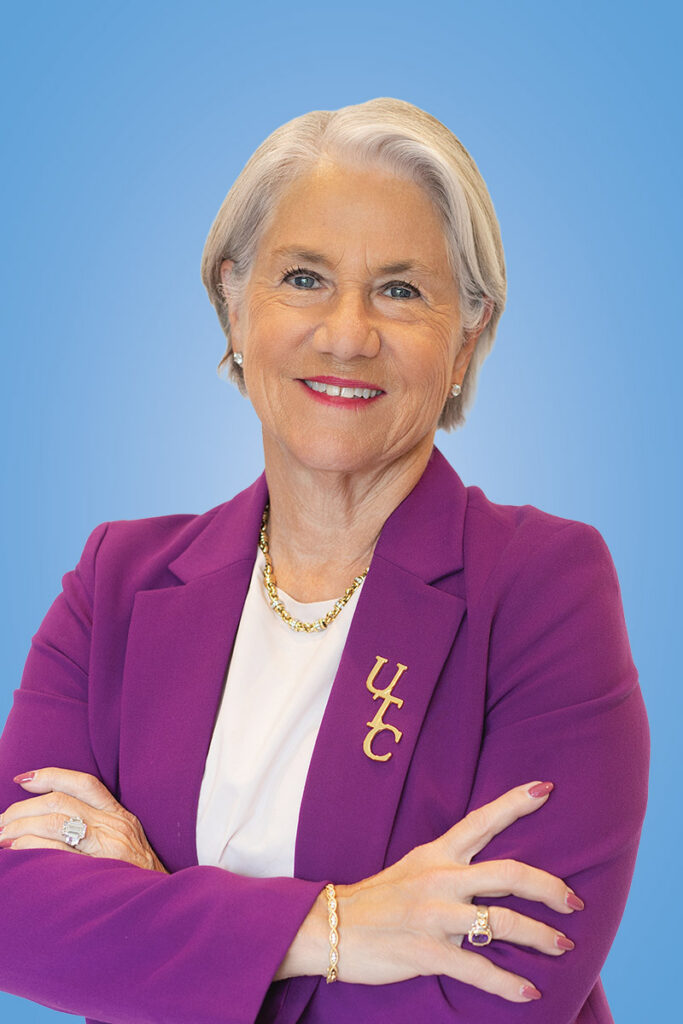
Christine Benz Smith, PhD, FNP-BC
Dean of the College of Nursing, University of Tennessee at Chattanooga (UTC)
Dr. Christine Benz Smith’s path to nursing education was not intentional. After the clinic in which she was the sole family nurse practitioner announced it was closing, Dr. Smith called UTC to ask if they needed an adjunct instructor.
“I was told no, they didn’t need an adjunct, but they needed an assistant professor. I applied and was named the Kay Chitty Professor, which enabled me to continue working two days a week as an FNP and three days as faculty,” shares Dr. Smith. “That was 25 years ago, and I have never had a day I didn’t want to go to UTC to be with students, faculty, and staff.”
With a master’s degree from UTC and a Doctor of Philosophy in Nursing from East Tennessee State University, Dr. Smith brings both clinical and academic experience to her role. When looking for prospective students, she looks for both a heart for the job and a realistic understanding of what it takes.
“It’s not all ‘Grey’s Anatomy,’” says Dr. Smith. “There are long, difficult days, and if the prospective student understands that and still wants to pursue the degree, then I fully support them.”
UTC already offered two of the three specialties that are high-need areas in healthcare: family nurse practitioner and adult gerontology acute care nurse practitioner. To further expand access to care, the university launched a psychiatric mental health nurse practitioner program.
“With this specialty, we are addressing the lack of access to care in underserved areas throughout our region in the three most critical areas,” adds Dr. Smith.
To keep up with the ever-evolving nursing profession, UTC is adding the Dorothy and Jim Kennedy Health Science Building, scheduled to house the college in the summer of 2027, to further expand its hands-on training capacity.
“Sixty percent of the square footage is dedicated to education, and of that, 40% is simulation space,” shares Dr. Smith. “The simulation center is endorsed by INACSL, and we will apply for accreditation after we are in our new space.”
As UTC continues to grow, Dr. Smith remains focused on the students who will carry the profession forward.
“It is so exciting to see the students at graduation when their professional life is just beginning,” finishes Dr. Smith. “They are so enthusiastic about caring for patients. I hope that enthusiasm doesn’t fade – ever. My enthusiasm for the nursing profession has not faded, and I have been at this for 50 years!”
Meet the Author

Ali Lemmons, BS, Summa Cum Laude
Ali Lemmons is a graduate of the University of Tennessee at Chattanooga, where she earned a Bachelor of Science in Communications with a minor in computer science with the distinction of summa cum laude. While at UTC, Ali earned the Outstanding Senior Award for the communication department and was inducted into the Kappa Tau Alpha honor society. As editor/digital content specialist for CMC Media & Marketing Group, Ali leads the ideation, conceptualization, and development of numerous health, wellness, business, sports, and lifestyle articles published in print and online for HealthScope® and CityScope® magazines as well as Choose Chattanooga® and Choose Huntsville™ – premier publications serving Southeast Tennessee, North Georgia, and North Alabama. She is also involved in content creation for Digital Smart Marketing customers and is the lead copywriter for the company’s social media accounts. In her free time, Ali enjoys reading, hiking, and exploring everything the Scenic City has to offer.