
Our balance system is complex and relies on multiple systems that work together. The exercises below target the primary muscles and movement patterns to assist in decreasing falls. Complete these exercises with a sturdy surface and/or a spotter nearby for safety. Kitchen countertops or the back of a sofa work well for support.”
Rebecca Keach, PT, Encompass Health Rehabilitation Hospital of Chattanooga
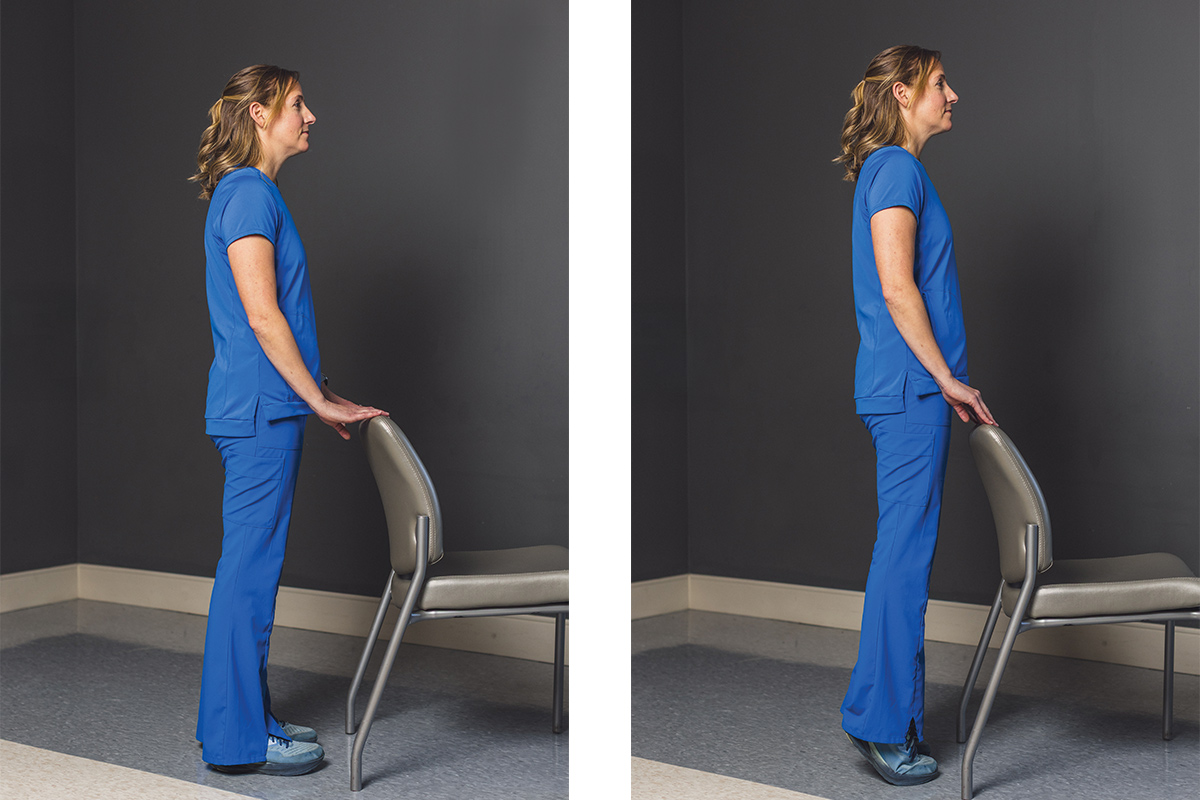
Begin with your feet flat on the ground and slowly raise your heels, then lower with control. Focus on lifting your body up and down rather than forward and back. This exercise improves the strength of large and small muscle groups of the foot and ankle, which we rely on as our first line of defense to maintain balance when standing still and when moving. Complete three sets of 10 heel raises.
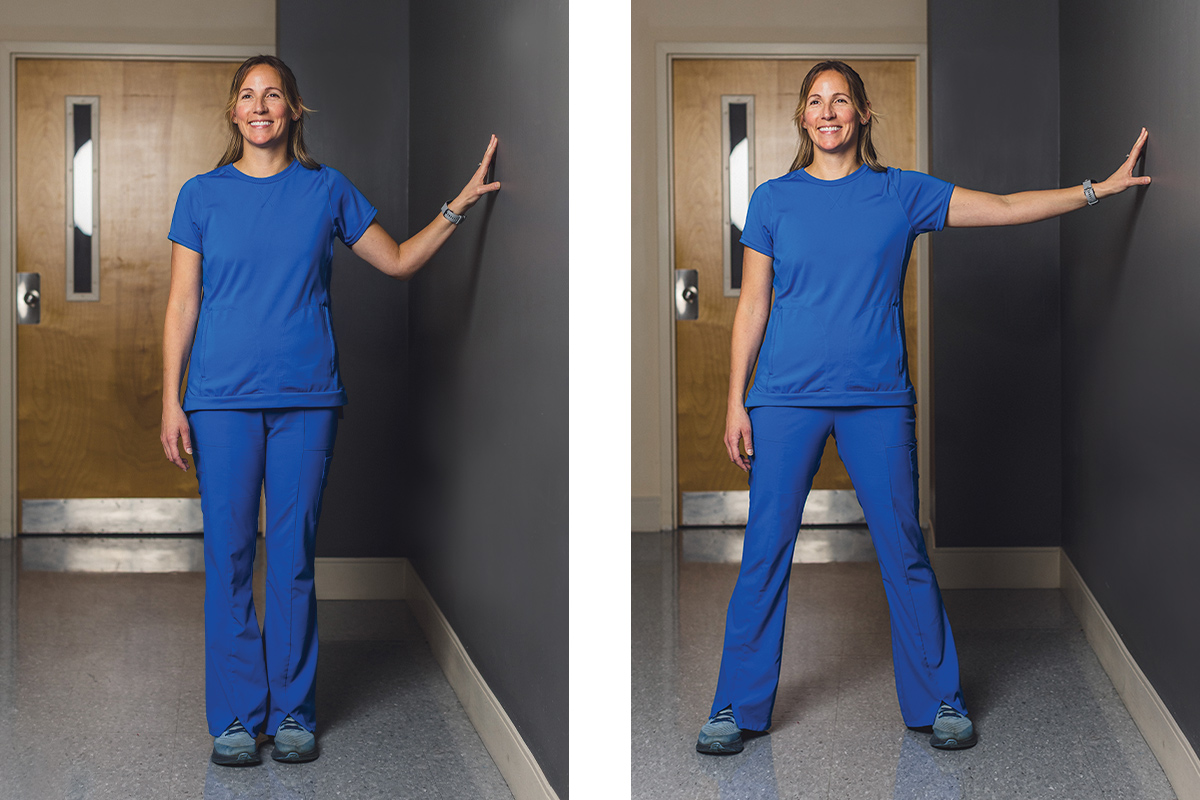
Keep your body and feet facing forward and sidestep in both directions. This targets the side muscles of the hip, improves stability when standing on one leg, and helps to strengthen stepping strategies when balance is challenged or lost. Complete three sets of 10 side steps.
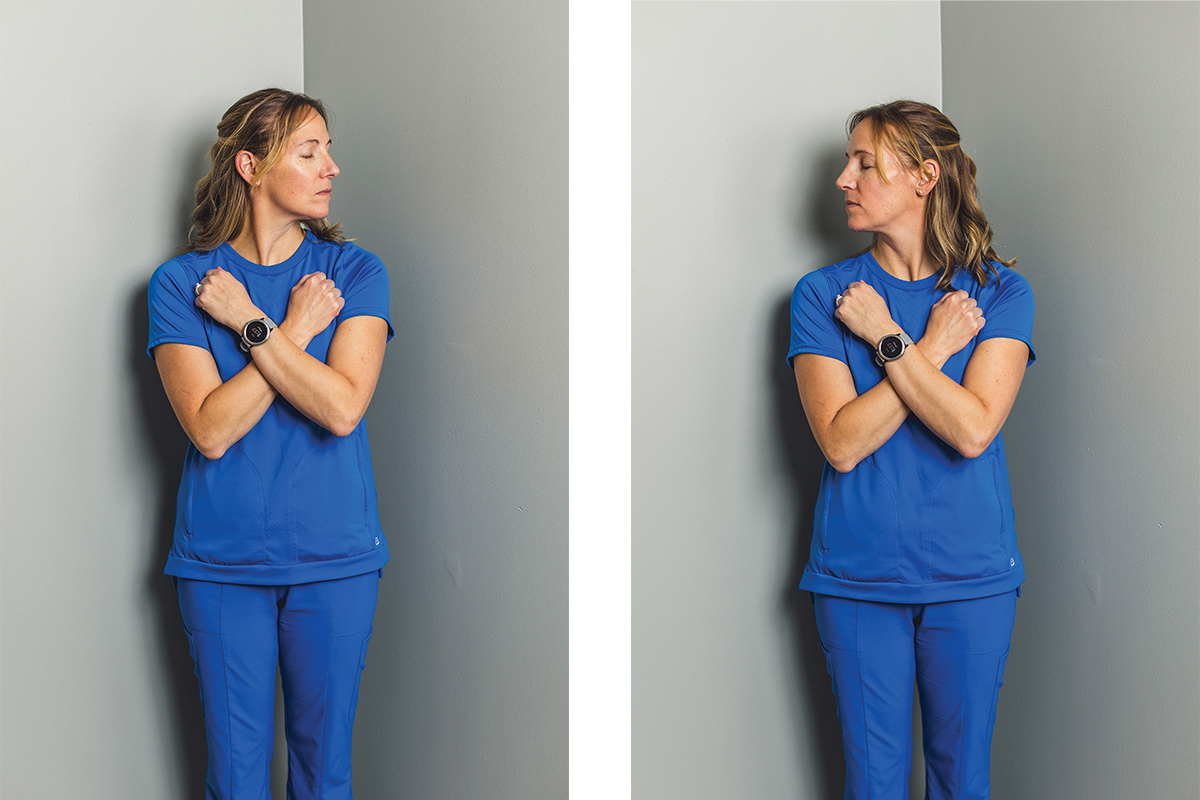
Stand with your back facing a corner for safety. Keep your arms at your side or across your chest. Start with your eyes open and turn your head side to side. For increased challenge, repeat with your eyes closed. This challenges your vestibular and visual system, increasing reliance on your sensory input through your feet and ankles.
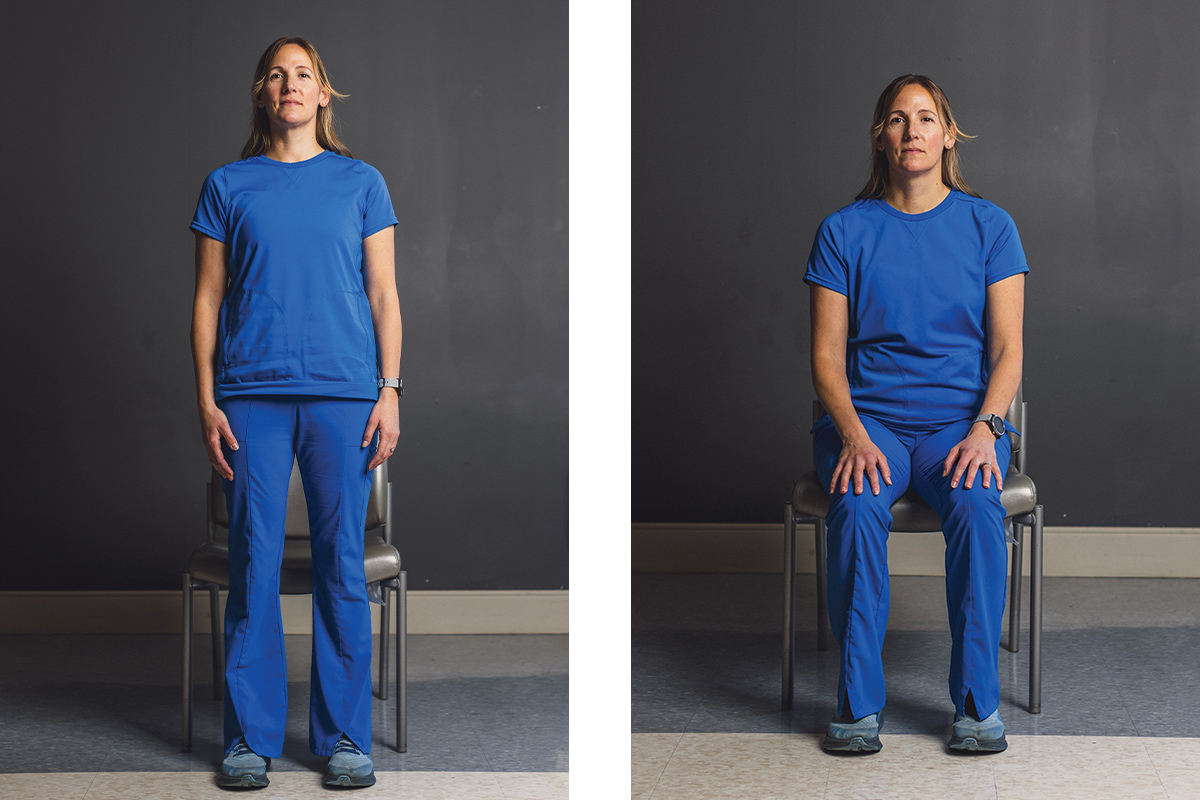
Begin in a seated position, raise your body to standing, then slowly lower to sitting. Try to control your descent and sit softly. When beginning, you may need to use your hands. As you progress, work toward not using hands to improve strength, coordination, and balance. Complete three sets of five to 10 reps.
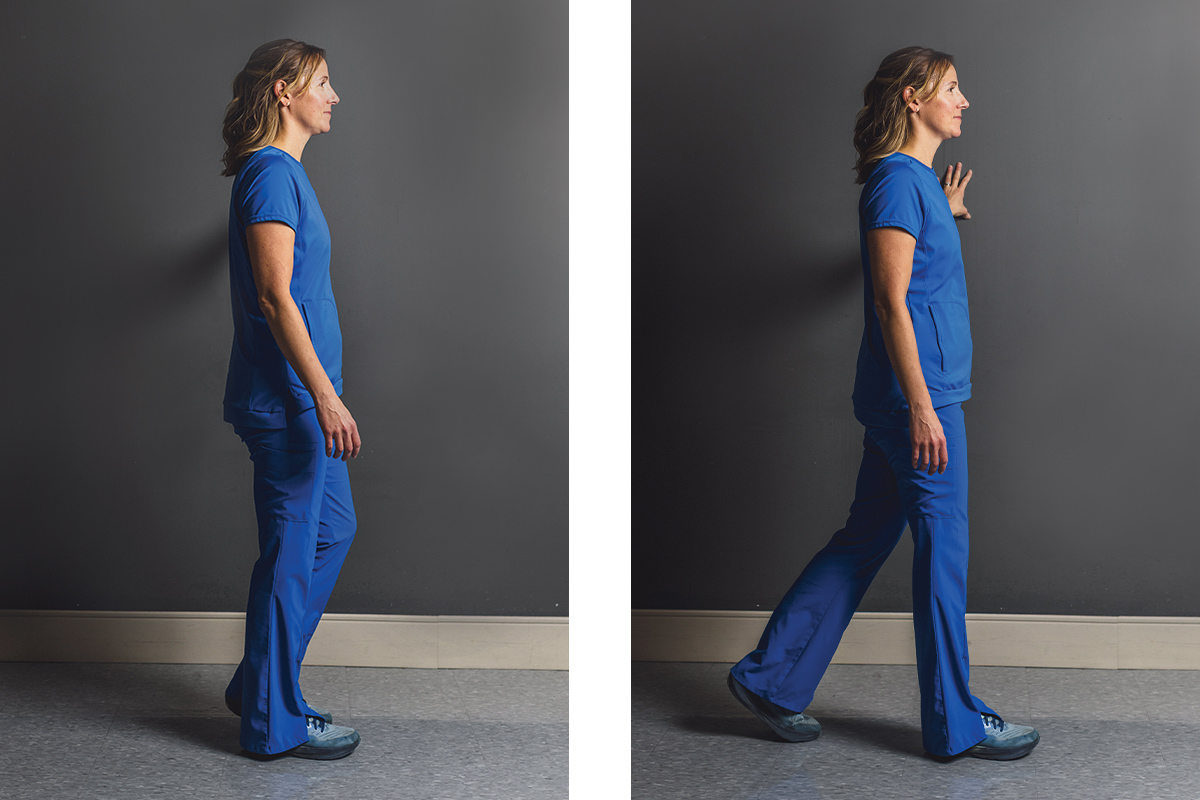
Clear a large space and walk backward at a moderate pace. You may need a spotter nearby. Walking backward improves overall coordination and functionally activates the muscles in the back part of the leg.
HEALTH
BEAUTY & STYLE
LIFE
RELATIONSHIPS
FOOD
FITNESS
PERSONAL GROWTH
ABOUT US

HEALTH
BEAUTY & STYLE
LIFE
RELATIONSHIPS
FOOD
FITNESS
PERSONAL GROWTH
ABOUT US
HEALTH
BEAUTY & STYLE
LIFE
RELATIONSHIPS
FOOD
FITNESS
PERSONAL GROWTH
ABOUT US
HEALTH
BEAUTY & STYLE
LIFE
RELATIONSHIPS
FOOD
FITNESS
PERSONAL GROWTH
ABOUT US
HEALTH
BEAUTY & STYLE
LIFE
RELATIONSHIPS
FOOD
FITNESS
PERSONAL GROWTH
ABOUT US
HEALTH
BEAUTY & STYLE
LIFE
RELATIONSHIPS
FOOD
FITNESS
PERSONAL GROWTH
ABOUT US
HEALTH
BEAUTY & STYLE
LIFE
RELATIONSHIPS
FOOD
FITNESS
PERSONAL GROWTH
ABOUT US