Health in a Minute

Q. My son suffers from severe allergies every spring. I’ve heard that allergy shots may help him, but I don’t know much about them. How effective are they, and how long do they take to work?
A. Allergy shots can be a real help for kids (and adults) with bad spring allergies, especially when medicines just aren’t enough. Many of my patients start noticing improvement in a few months, but it commonly takes six to 12 months for clear benefit, and the full payoff may take a year or more. Lasting tolerance is built over several years of consistent therapy, not only for spring-time allergies, but other seasonal as well as year-round allergies. In my experience, they’re worth considering when symptoms are severe, recurring, or affecting sleep, school, or sports. Be sure and talk to your primary physician or give us a call if you have any questions. Your treatment plan will always include avoidance measures, with medications or allergy shots added when appropriate.

Curt Chaffin, MD
Specialist in Pediatric and Adult Allergy and Asthma, The Allergy & Asthma Group of Galen
Q. When mental health systems don’t fully respond to traditional approaches, what advanced or integrative treatments are available?
A. Since the 1950s, pharmacotherapy, the use of medication, has helped many people to regain function from neuropsychiatric diseases such as depression. Unfortunately, fewer than half of patients achieve remission; 30-40% remain symptomatic, and some cannot tolerate antidepressants. Individuals who fail two or more trials are considered to have treatment-resistant depression (TRD). In these cases, evaluating genetics, neuroendocrinology, and immunology is critical, as these disorders demand a multimodal approach.
Even so, hope lies in treatments such as floatation therapy, transcranial magnetic stimulation (TMS), and ketamine. Floatation helps to lower inflammation over time; TMS helps strengthen communication between emotional and cognitive control networks; and ketamine, administered under medical supervision, promotes the growth of new neural pathways. Overall, these therapies work best within an individualized plan that prioritizes nutrition, sleep, exercise, and avoidance of neurotoxins.

Rebecca Spivey, PMHNP-BC
Psychiatric Mental Health Nurse Practitioner, Nashville Brain Institute
Q. My sleep disorder is contributing to multiple other health concerns. How should I approach treatment?
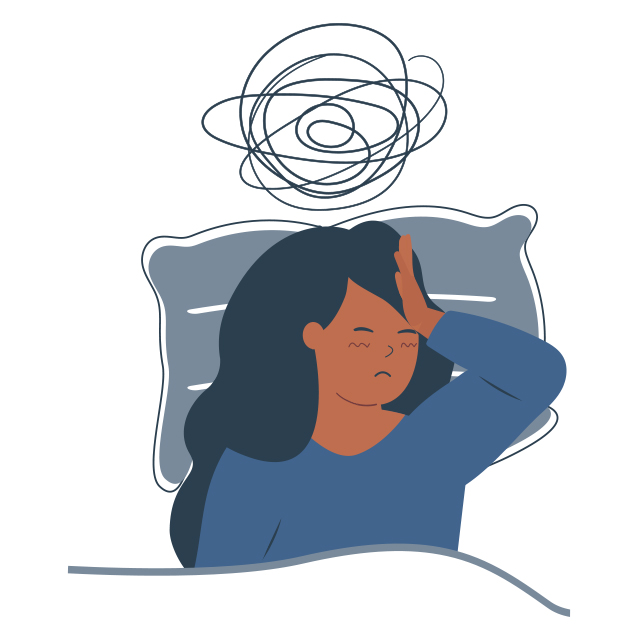
A. When a sleep disorder affects multiple aspects of health, treatment should take a comprehensive and coordinated approach. Poor sleep can impact mood, cardiovascular health, metabolism, and cognitive function, so addressing the root sleep issue often leads to broader improvements. Start with a thorough evaluation to identify the specific disorder and any contributing conditions. Treatment may include behavioral interventions, medical therapies, or lifestyle adjustments tailored to your needs. Collaboration between providers – such as primary care, mental health, and sleep specialists – can ensure all related concerns are addressed effectively and that treatment strategies work together rather than in isolation.

Anuj Chandra, MD, D.ABSM
Founder, Advanced Center for Sleep Disorders
Learn More: Sleep Disorders; Anxiety & Sleep Deprivation
Q. I tend to get angry easily and then feel regret or guilt about how I handled the situation. How can I learn to break this cycle instead of repeating it?
A. Anger is an emotion that many people struggle with knowing how to handle. Maybe the focus should not be on stopping the anger, but on discovering the “why” or what emotions may be underneath our anger. Anger is our body’s alarm system that lets us know that our boundaries are being crossed. Anger can also be covering for some “icky” emotions like vulnerability, weakness, hurt, jealousy, or embarrassment. Those are emotions that leave us feeling less in control. When we are angry, we feel stronger and more in control.
Try asking first: Where are my boundaries (physical, emotional, sexual, or time) being crossed? And/or what emotions may be underneath my anger that I need to express and process with a therapist or trusted friend? Many times, a little curiosity around anger can be more helpful than suppression.

Brittney Lord, LPC-MHSP
Counselor and Outreach Coordinator, Roots Counseling Center
Q. I sometimes experience temporary ringing or muffled hearing after loud events. Is this normal, or should I be concerned?
A. It’s very normal to experience ringing in the ear (tinnitus) and temporary hearing loss after loud events. These symptoms arise when microscopic nerves, called stereocilia, are overstimulated by excessively loud noise vibrations. This overstimulation causes stereocilia to have less movement than normal, which reduces the amount of sound signals going to the brain – resulting in auditory fatigue. Manifesting as muffled or reduced hearing, this fatigue can be accompanied by ringing. This can be temporary but can also cause permanent damage. Typically, any sudden or repetitive noise that’s 85dB and above can cause temporary or permanent damage. To prevent damage, custom earmolds or other forms of hearing protection are highly recommended and available with a hearing professional. In most cases, hearing will revert to normal within 48 to 72 hours. If hearing issues persist, contact a hearing professional.

Craig M. Smith, BC-HIS
Board-Certified Hearing Instrument Specialist, Audiology Services of Chattanooga
Learn More: Tinnitus: Causes, Treatments, & More
Meet the Author

Abby Callahan, BA
Abby Callahan is a graduate of the University of Tennessee at Chattanooga, where she earned a Bachelor of Arts in English with a minor in Spanish and the distinction of cum laude. Prior to joining CMC Media & Marketing Group as editor/digital content specialist, Abby successfully fulfilled roles in marketing and event planning, as well as strategic communications and storytelling for a wide variety of initiatives. Today, Abby leads ideation, conceptualization, and development for numerous health & wellness, business, sports, and lifestyle articles published in print and online for HealthScope® and CityScope® magazines as well as Choose Chattanooga® and Choose Huntsville® – premier publications serving Southeast Tennessee, North Georgia, and North Alabama. She also contributes to the development of blogs and other content shared on the publications’ digital platforms. Off the clock, she enjoys thrifting, sewing and designing her own clothes, climbing, and going on adventures with her husky, Hazel.