Augmented Reality in Rehabilitation

The Strolll system is improving therapy for rehabilitation patients.

The Strolll system is improving therapy for rehabilitation patients.

Understanding Augmented Reality

Augmented reality (AR) refers to the interactive overlay of digital information onto the real-world environment. This cutting-edge technology combines cameras, sensors, and displays to show images and other information as part of the scene the user is viewing. While AR can be used on a handheld device, wearable systems such as headsets and glasses provide a fully immersive and integrated experience.

New Solutions

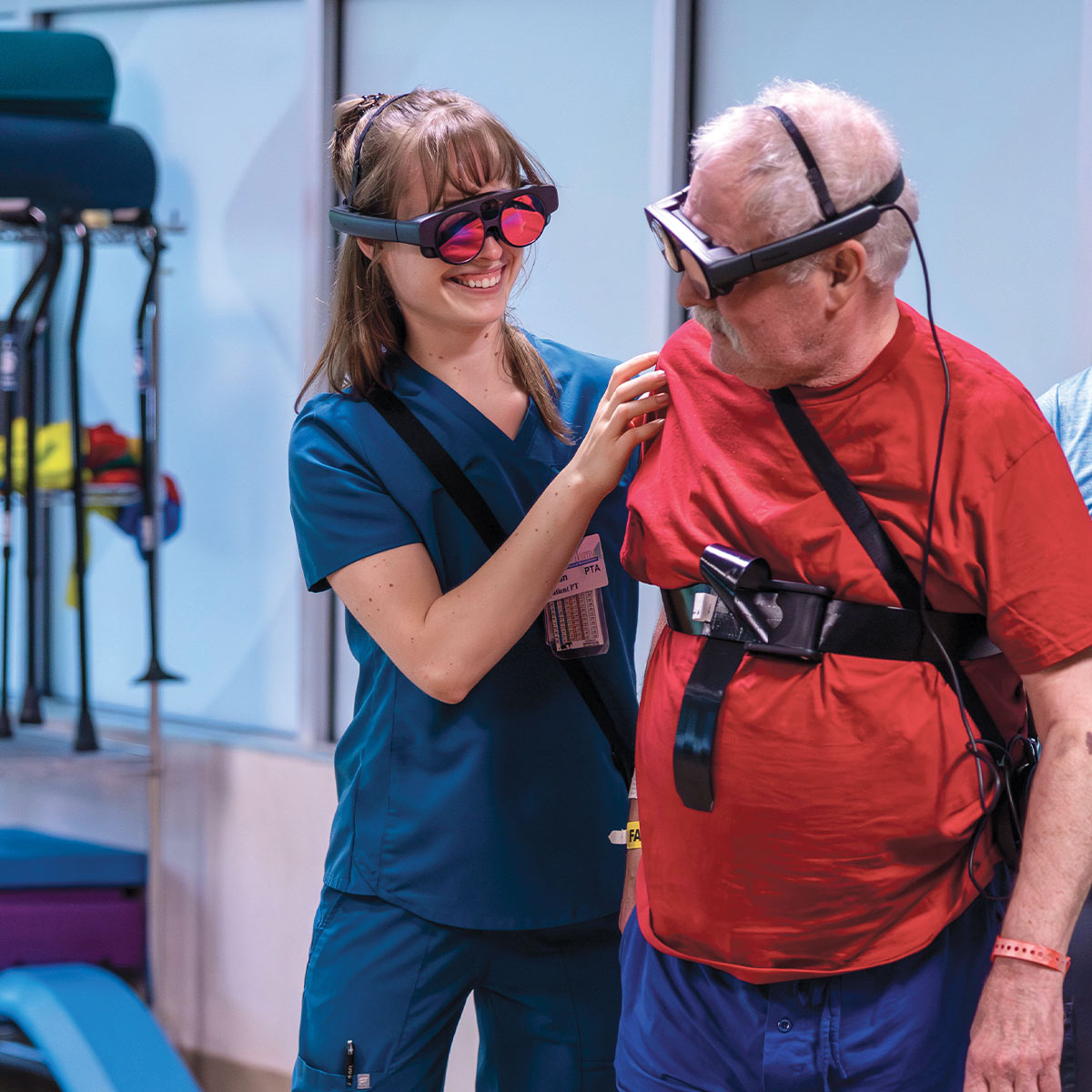
AR technology is being implemented into a variety of settings, including physical rehabilitation. One of the latest developments is Strolll, an innovative AR system designed to improve outcomes for rehabilitation patients through engaging and effective AR exercises and assessments. The simple-to-use platform can support multiple therapy goals with sports simulations and games that prompt rehabilitative movement, and therapists can easily switch between motor, gait, balance, and cognitive tasks without interruption. During therapy with Strolll, headsets are worn by both the patient and their therapist, allowing them to view the AR exercises and customize them in real time. Strolll can be used anywhere, with options for patients whether they are seated, standing, or walking.

Benefits to Patients

Unlike virtual reality, which involves a fully digital display, AR lets patients view their real-world environment, allowing them to be fully oriented and preventing motion sickness. This leads to a higher tolerance for exercises and longer sessions, supporting patient outcomes. By gamifying exercises in a novel way, Strolll also helps patients stay engaged in therapy and feel motivated to complete their care plan.

“Strolll AR has enhanced our patients’ rehabilitation at Siskin Hospital by improving motivation, attention, and participation, which are often impaired after a brain injury. The real-time visual cues and gamified exercises help stimulate neuroplasticity and support retraining of motor and cognitive pathways needed for balance, gait, and dual-task performance, all of which help our patients achieve their goals.”


Meet the Author

Rachel Studebaker
Rachel Studebaker, BA, English, Summa Cum Laude

Rachel Studebaker is a graduate of Lee University where she earned a Bachelor of Arts degree in English with a minor in advertising. While attending Lee, Rachel served as editor-in-chief and creative director for the school’s biannual publication Vindagua and was a member of Sigma Tau Delta English Honors Society. As managing editor for CMC Media & Marketing Group, she is responsible for the development and completion of 16 publications involving health, wellness, business, sports, and lifestyle articles published in print and online for HealthScope®, CityScope®, and Choose Chattanooga® magazines – premier publications serving S.E. Tennessee and North Georgia. Additionally, Rachel has led digital marketing initiatives for CMC Media & Marketing Group as well as the development of content for the introduction of Choose Huntsville™, Huntsville Resource & Relocation Guide™ for Huntsville, Alabama.

Get the FREE Digital Issue Before the Magazine Hits the Stands.