Advancements in Treating Teenage Acne

Multiple treatment options are available to help teenagers clear up acne.

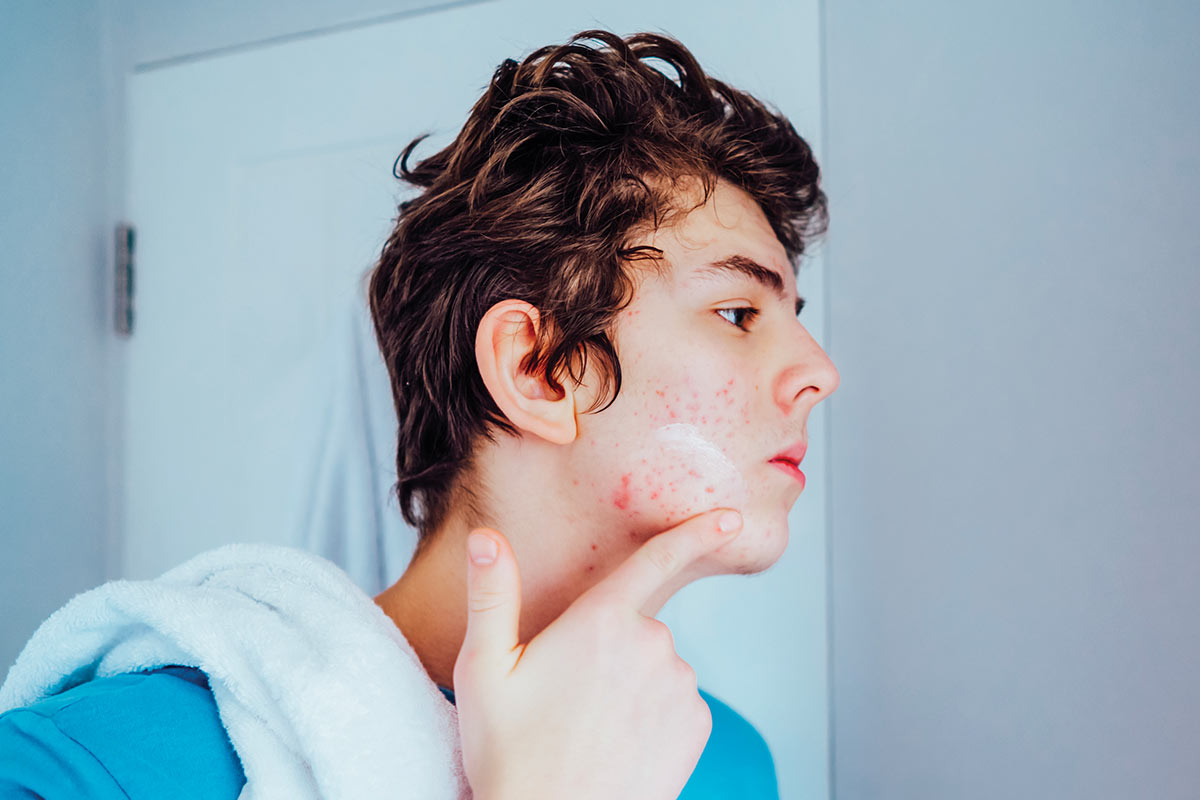
A young man with curly hair examines his face, applying skincare on acne-affected skin in a well-lit bathroom.

Treating Teenage Acne

Acne is a very common skin condition that, according to the American Academy of Pediatrics, affects approximately 85% of teenagers. It occurs when the skin’s pores become clogged with dead skin cells and excess oil and cause bacteria to multiply. Hormonal changes during puberty can increase oil production, leading to acne.

Acne can appear as blackheads, whiteheads, pimples, or nodules and cysts, and may be accompanied by redness or tenderness. While acne most commonly appears on the face, it can also affect other areas of the body, such as the neck, back, and chest.

Treatment Options

Advancements in medicine have produced many options for treating acne:

Benzoyl peroxide can be found in over-the-counter products, with a 4% concentration used for the face and 10% mainly used for body acne. Benzoyl peroxide kills bacteria without causing bacterial resistance and reduces oil production.

Another over-the-counter option is adapalene cream or gel. This helps with whiteheads and blackheads if used nightly after gentle cleansing. It also helps prepare the skin for stronger retinoids commonly prescribed as part of an acne topical regimen. Retinoids promote skin cell turnover, reducing inflammation and preventing clogged pores.

Topical or oral antibiotics are prescribed to kill skin bacteria and reduce redness. Hormonal component of acne is addressed differently with several safe and effective topical and oral options, such as Winlevi and spironolactone.

Accutane is an oral medicine used to treat severe cystic acne that hasn’t responded to other treatments.

“Consistency is key when treating acne, with results typically beginning to appear within two months. To aid treatment, teenagers should wash their face morning and night with a gentle cleanser such as Cerave, Cetaphil, or Vanicream, and avoid picking at their skin. A dermatologist can help advise which products to use and create a personalized treatment plan to restore clear skin.”


Meet the Author

Rachel Studebaker
Rachel Studebaker, BA, English, Summa Cum Laude

Rachel Studebaker is a graduate of Lee University where she earned a Bachelor of Arts degree in English with a minor in advertising. While attending Lee, Rachel served as editor-in-chief and creative director for the school’s biannual publication Vindagua and was a member of Sigma Tau Delta English Honors Society. As managing editor for CMC Media & Marketing Group, she is responsible for the development and completion of 16 publications involving health, wellness, business, sports, and lifestyle articles published in print and online for HealthScope®, CityScope®, and Choose Chattanooga® magazines – premier publications serving S.E. Tennessee and North Georgia. Additionally, Rachel has led digital marketing initiatives for CMC Media & Marketing Group as well as the development of content for the introduction of Choose Huntsville™, Huntsville Resource & Relocation Guide™ for Huntsville, Alabama.

Get the FREE Digital Issue Before the Magazine Hits the Stands.