Advancements in Orthobiologics

These advancements include a variety of cutting- edge treatments that harness the biologic healing powers of human cells to treat orthopedic conditions.

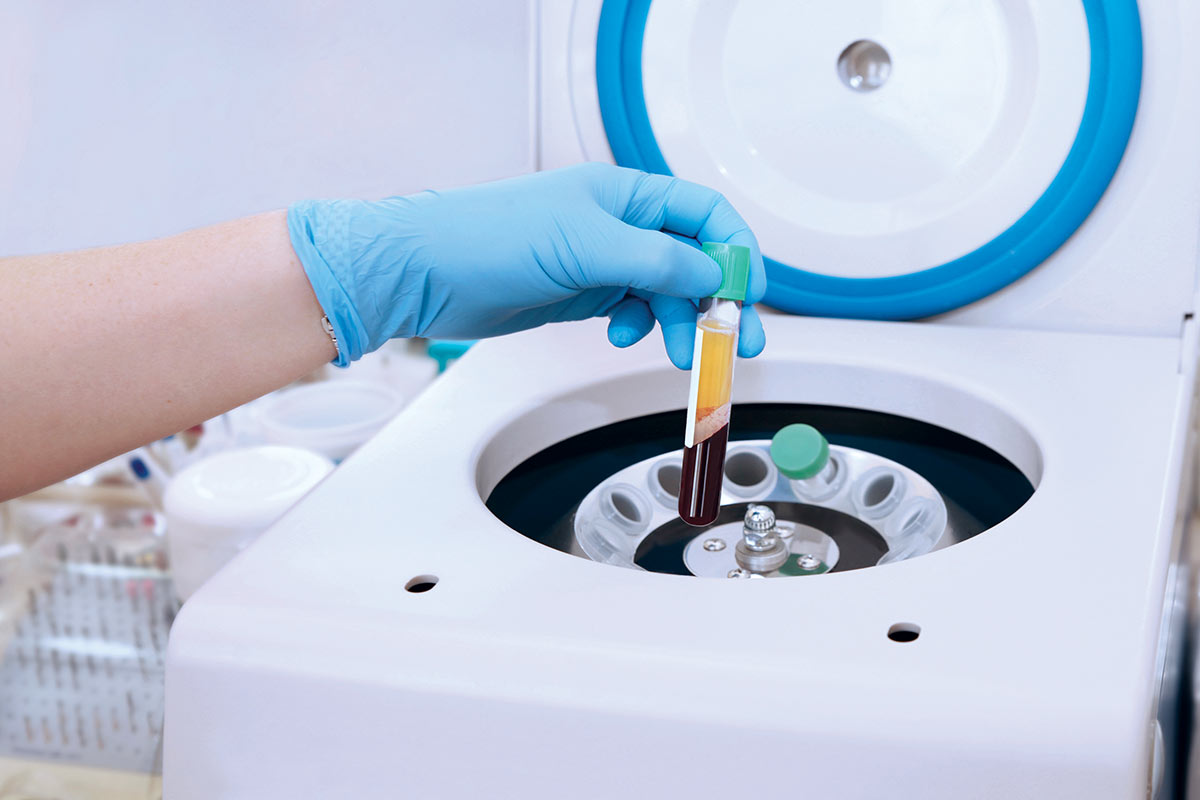
A gloved hand places a blood sample tube into a laboratory centrifuge for processing.

Understanding Orthobiologics

Orthobiologics, also known as orthopedic regenerative medicine, is a rapidly advancing field of medicine that uses natural, tissue-derived compounds to treat acute injuries and chronic or degenerative conditions affecting the muscles, bones, joints, and soft tissues. These treatments can reduce inflammation; relieve pain; promote healing after injury or surgery; and improve joint function. Orthobiologics can be administered on their own, or, more commonly, used in conjunction with physical therapy, pain management techniques, or during surgery.

How It Works

Orthobiologics work by extracting healthy platelets and/or bone marrow that contain growth factors – naturally occurring proteins that stimulate growth and healing – and other anti-inflammatory agents from a patient’s body and injecting them into the affected area. These procedures are minimally invasive and patients typically experience results within 4-6 weeks of treatment.

Common Orthobiologic Procedures

Platelet Rich Plasma (PRP)

The patient’s peripheral blood is drawn and then spun in a centrifuge to separate it into layers. The PRP layer that is rich with growth factors and platelets is extracted and reintroduced into the joint.

Bone Marrow Aspirate

Bone marrow fluid, called aspirate, is extracted from a healthy bone in the patient’s body and placed in a centrifuge to generate a concentration of powerful cells. These are then reintroduced into the joint to stimulate regeneration and encourage healing.

“The use of orthobiologic treatments continues to evolve and advance as a helpful adjunct to traditional orthopedic care. We’ve been very encouraged by positive results for the majority of individuals choosing to explore these cutting-edge options. Many patients who decide they are not physically or mentally ready for joint replacement or other surgery have been successfully treated with in-office orthobiologic injections to manage symptoms and preserve function. We’ve also seen great success using orthobiologics as an augmentation to traditional orthopedic surgical procedures to enhance healing and optimize recovery.”

Meet the Author

Rachel Studebaker
Rachel Studebaker, BA, English, Summa Cum Laude

Rachel Studebaker is a graduate of Lee University, where she earned a Bachelor of Arts in English with a minor in advertising with the distinction of summa cum laude and served as editor-in-chief of the university’s biannual magazine, The Vindagua. After graduation, Rachel joined CMC Media & Marketing Group as an editor. Today, she serves as managing editor and is responsible for leading the editorial team in the development and completion of content for 17 publications involving health & wellness, business, sports, and lifestyle published in print and online for HealthScope® and CityScope® magazines as well as Choose Chattanooga® and Choose Huntsville® – premier publications serving Southeast Tennessee, North Georgia, and North Alabama. In addition to writing, editing, and coordinating copy, Rachel oversees networking and reputation management for the company’s publications. In her free time, she enjoys reading, hiking, attending concerts, trying new restaurants, and traveling with her husband.

Get the FREE Digital Issue Before the Magazine Hits the Stands.