




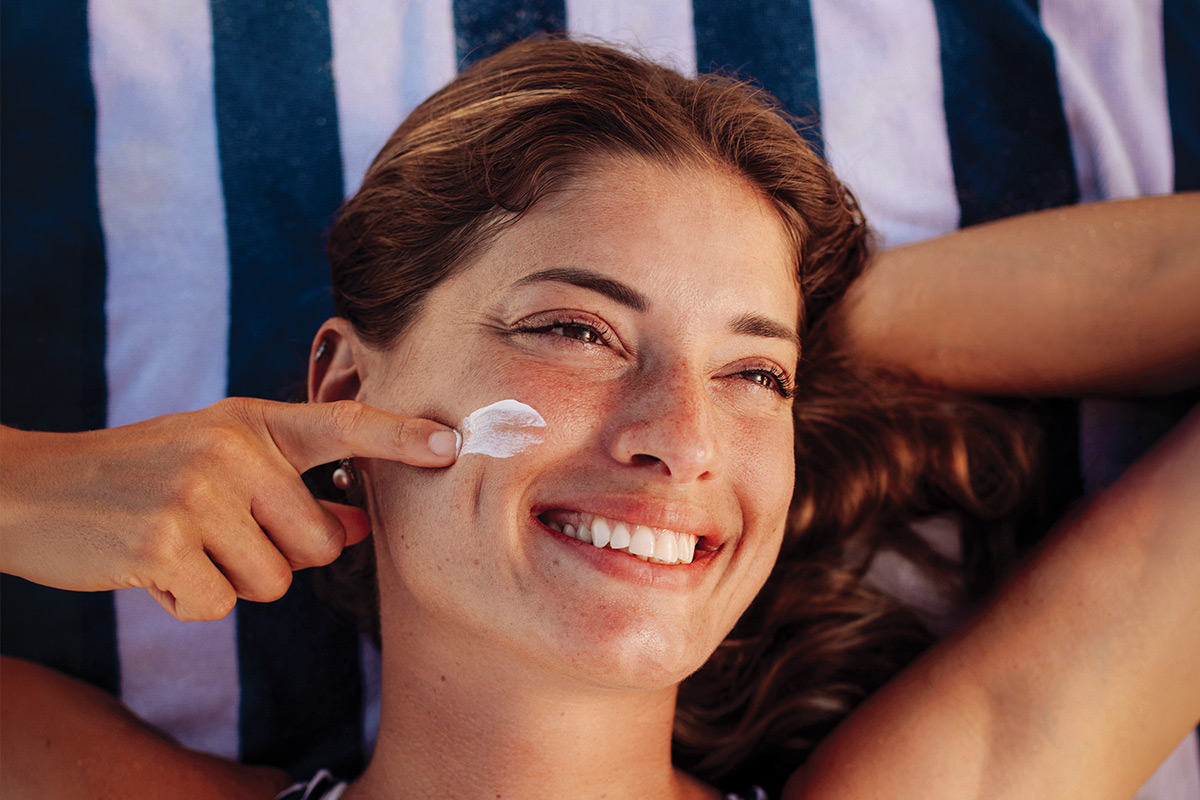
If summer was a fragrance, some might say that it smells of sunscreen, aloe vera, or picaridin. This is because the rising temperatures and longer daylight hours increase the importance of prioritizing one’s skin health – especially if you want to maximize summer fun and enjoy outdoor activities. Learn how skin health can be impacted throughout the summer, as well as some skincare tips from local dermatologists.
In addition to light, the sun produces a form of energy known as ultraviolet (UV) radiation. A healthy amount of exposure to UV radiation provides individuals with the vitamin D that is necessary to function and survive. But overexposure can lead to an uncomfortable sunburn or rash, as well as increase signs of aging and the risk of developing skin health issues in the future.
Because UV radiation impacts the skin in different ways, scientists classify the energy into three different wavelengths or rays:

Penetrate deeply and cause the skin to wrinkle, tan, and/or burn. Overexposure can lead to skin cancer.

Damage the outermost layers of the skin, causing sun spots, tanning, sunburn, and blistering, which can lead to skin cancer.

Do not impact skin health, as they are absorbed by the earth’s atmosphere.
A: Absolutely. Healthy skin naturally looks brighter and more radiant, and you don’t need UV damage to achieve a summer glow. The safest approach is combining good skincare habits with sun protection.
A few recommendations include:
• Use a broad-spectrum SPF 30+ sunscreen daily, even on cloudy days.
• Wear sun-protective clothing, hats, and sunglasses when outdoors.
• Stay hydrated and maintain a consistent skincare routine.
• Incorporate antioxidants like vitamin C to help brighten skin and protect against environmental damage.
• Use gradual self-tanners or spray tans instead of tanning beds or intentional sun tanning.
• Gentle exfoliation and moisturization can also improve skin texture and radiance safely.
Frequent tanning may look appealing short term, but it accelerates wrinkles, pigmentation changes, and skin cancer risk over time.
With the UV intensity tending to be higher in the summer, especially mid-day when UV rays have less distance to travel, the season invites individuals to be diligent about protecting their skin in various ways.
Broad-spectrum sunscreen with SPF 30 or higher is the best way to protect the skin against UVA and UVB rays. It should be reapplied every two hours or immediately after excess sweating or exiting the water/pool.
Wearing protective clothing, such as wide-brimmed hats, sunglasses, long-sleeved shirts, or a beach cover-up, can also help to protect overexposed skin. Tightly woven fabrics offer the best protection, so clothing or hats with holes should be avoided to fully protect your body, scalp, and ears.
Staying hydrated is crucial for protecting one’s skin in the summer. Drinking an adequate amount of water helps to flush out toxins and keeps the skin plump – preventing fine lines and dry, flaky patches.
Whether it’s under an umbrella, tent, or tree, relaxing in the shade can help decrease the harmful impacts and intensity of UV rays. Even so, individuals still need to apply sunscreen and wear protective clothing.

Research suggests that most skin cancers – including 90% of cutaneous melanomas – are connected to overexposure to UV rays, meaning skin cancer is highly preventable with the proper precautions. UV-induced skin cancers are also highly treatable with early detection and screenings.
Sweating helps to cool the body and purify it of toxins, but when mixed with outdoor elements, it can sometimes irritate the skin or worsen existing conditions. Potential reactions include:
• Acne breakouts – sweat combines with bacteria, oil, and dirt on the skin, clogging pores and leading to breakouts.
• Heat rash (prickly heat) – blocked sweat glands trap perspiration under the skin, causing tiny, itchy bumps.
• Flareups – sweat has sodium that dries out the skin, which can cause sensitive skin or skin that is eczema-, psoriasis-, or rosacea-prone to react or flare up.
• Chafing and irritation – sweat carries ammonia and urea that can irritate the skin; when trapped under clothing, the moisture and friction can also cause itching, inflammation, and even blisters.
To prevent the negative impacts of sweat, try exercising during the coolest parts of the day or moving indoors. It’s important to blot sweat away with a clean towel and use oil-free products on the face, neck, back, and chest. Wearing lightweight, loose-fitting clothes made of cotton will also discourage clogged pores and skin irritation.
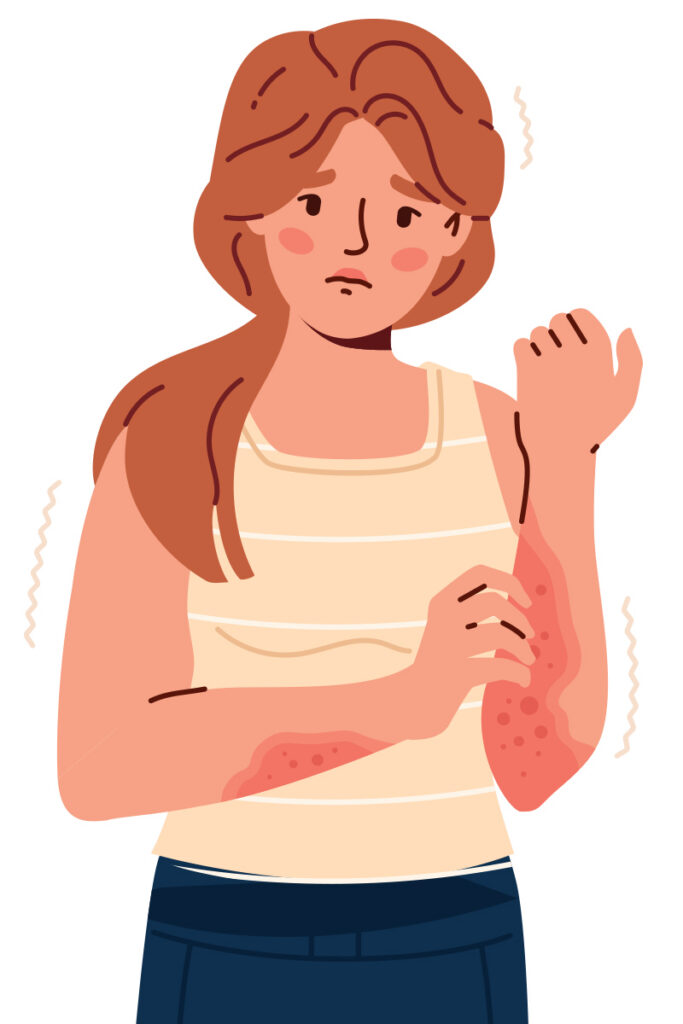
Summer activities often lead to an increased exposure to bugs and poisonous plants. Most bug bites and stings cause mild reactions, as do poison ivy, oak, and sumac rashes, but they can still be uncomfortable. It’s important not to scratch bites, stings, or rashes, as this can lead to infection and scarring.
To relieve itching bites and stings, use creams and lotions like antihistamines, hydrocortisone, or pure aloe vera. For poisonous plant rashes, soaking in a warm bath with baking soda or applying calamine lotion or hydrocortisone cream can offer relief.
Most bites and stings fade in a few days, but severe reactions – like trouble breathing or swelling of the face or eyes – require prompt medical attention. If a poisonous plant rash worsens or impacts the eyes or face, consult a dermatologist immediately.
A: The primary hazard to your skin in the summer of course is the sun, but there are other hazards to be aware of. If you’re out hiking or doing yard work, use an insect repellent with 20% DEET to reduce tick and other bug bites. Check for ticks after outdoor activities and remove any as quickly as possible. Also, know how to identify poison ivy and poison oak so that you can avoid it. If you know you have been exposed to poison oak or ivy, make sure you bathe really well, washing from your elbows and knees down – twice – to remove the plant’s urushiol that causes the rash. This will hopefully prevent it or lessen the effect.
A: Summer is when our skin faces its highest annual UV exposure, and UV radiation is the single biggest modifiable risk factor for skin cancer. In the Chattanooga area, the UV index regularly hits 8 to 10 from late spring through August, which means unprotected fair skin can start to burn in as little as 15 to 20 minutes. Beyond cancer risk, cumulative UV exposure is responsible for roughly 90% of the visible signs of skin aging, including wrinkles, brown spots, and loss of elasticity. Summer is also a good reminder to look out for the people around you. Self-checks should be a year-round habit, and the shower is a great daily opportunity to scan your own skin, but in the summer, your spouse, kids, parents, and friends are all more uncovered, and many skin cancers are first noticed by someone else. I encourage everyone to do regular head-to-toe self-checks, monitor the skin of loved ones, and encourage them to get their annual skin cancer screening. See a doctor promptly for any new or changing spots.

Abby Callahan is a graduate of the University of Tennessee at Chattanooga, where she earned a Bachelor of Arts in English with a minor in Spanish and the distinction of cum laude. Prior to joining CMC Media & Marketing Group as editor/digital content specialist, Abby successfully fulfilled roles in marketing and event planning, as well as strategic communications and storytelling for a wide variety of initiatives. Today, Abby leads ideation, conceptualization, and development for numerous health & wellness, business, sports, and lifestyle articles published in print and online for HealthScope® and CityScope® magazines as well as Choose Chattanooga® and Choose Huntsville® – premier publications serving Southeast Tennessee, North Georgia, and North Alabama. She also contributes to the development of blogs and other content shared on the publications’ digital platforms. Off the clock, she enjoys thrifting, sewing and designing her own clothes, climbing, and going on adventures with her husky, Hazel.
HEALTH
BEAUTY & STYLE
LIFE
RELATIONSHIPS
FOOD
FITNESS
PERSONAL GROWTH
ABOUT US
HEALTH
BEAUTY & STYLE
LIFE
RELATIONSHIPS
FOOD
FITNESS
PERSONAL GROWTH
ABOUT US
HEALTH
BEAUTY & STYLE
LIFE
RELATIONSHIPS
FOOD
FITNESS
PERSONAL GROWTH
ABOUT US
HEALTH
BEAUTY & STYLE
LIFE
RELATIONSHIPS
FOOD
FITNESS
PERSONAL GROWTH
ABOUT US
HEALTH
BEAUTY & STYLE
LIFE
RELATIONSHIPS
FOOD
FITNESS
PERSONAL GROWTH
ABOUT US
HEALTH
BEAUTY & STYLE
LIFE
RELATIONSHIPS
FOOD
FITNESS
PERSONAL GROWTH
ABOUT US
HEALTH
BEAUTY & STYLE
LIFE
RELATIONSHIPS
FOOD
FITNESS
PERSONAL GROWTH
ABOUT US