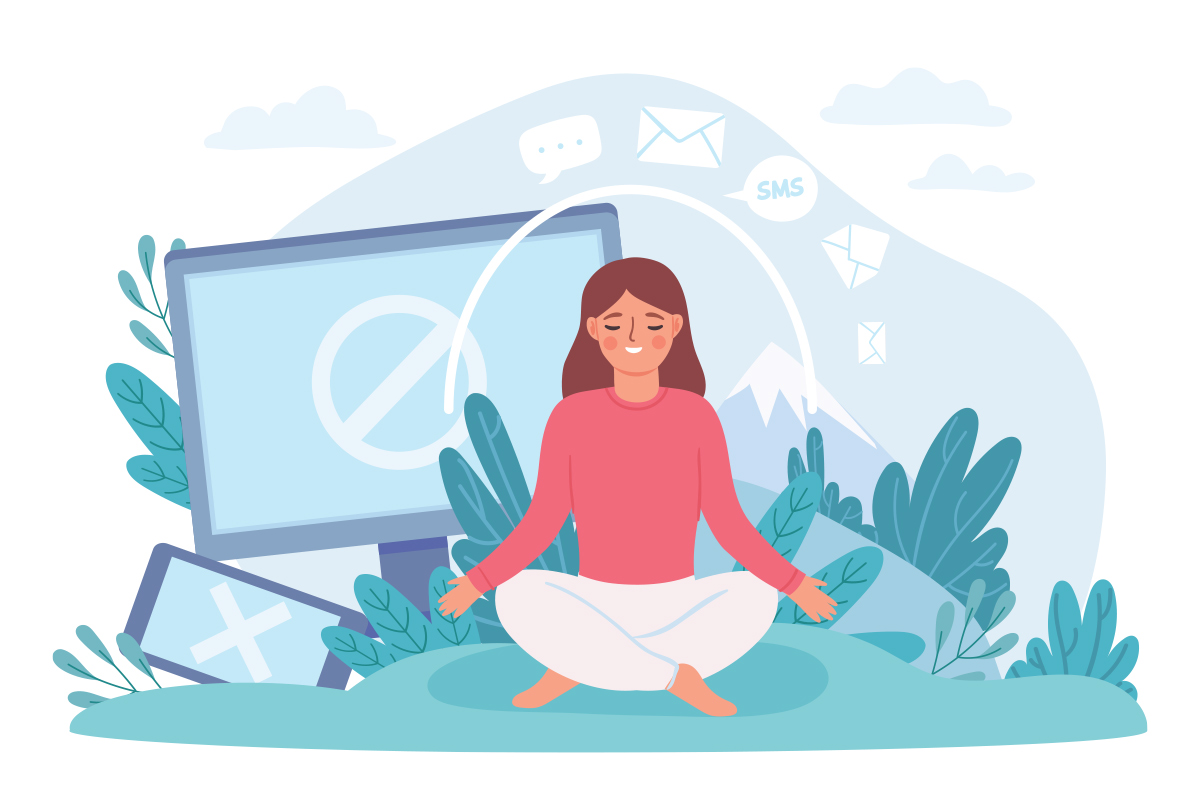


From the TV on your living room wall to the supercomputer in your pocket, screens are everywhere in our hyperconnected world. While technology offers us conveniences, information, and entertainment, too much time online can lead to a host of negative consequences. In fact, according to the Associated Clinic of Psychology, high levels of screen time are linked to an increased risk of anxiety, depression, and loneliness, particularly in adolescents and young adults.
Enter the digital detox – a period of time in which to temporarily reduce or completely eliminate screen time. Here, we discuss the benefits of reducing screen time, as well as practical ways to implement a digital detox into your life.
Whether eliminating devices altogether or simply creating a healthier balance, a digital detox offers both mental and physical health benefits. Benefits include:
Screens produce blue light, which boosts attention and reaction times. While beneficial during the day, at night, these wavelengths can disrupt the body’s circadian rhythm. Reducing screen time at night can support a healthy sleep environment.
According to the University of Maine, the average users spends just shy of two and a half hours on social media each day. Decreasing time spent on screens means more time and mental energy are freed up for meaningful activities like exercising, being outdoors, or spending time with family.
Less time with your face glued to a screen means more time for face-to-face interactions. You’re also more likely to be fully present with friends and family when distractions are limited.
Whether you start small or go all in, these simple strategies can help you build a better balance between your online and offline life.
HEALTH
BEAUTY & STYLE
LIFE
RELATIONSHIPS
FOOD
FITNESS
PERSONAL GROWTH
ABOUT US

HEALTH
BEAUTY & STYLE
LIFE
RELATIONSHIPS
FOOD
FITNESS
PERSONAL GROWTH
ABOUT US
HEALTH
BEAUTY & STYLE
LIFE
RELATIONSHIPS
FOOD
FITNESS
PERSONAL GROWTH
ABOUT US
HEALTH
BEAUTY & STYLE
LIFE
RELATIONSHIPS
FOOD
FITNESS
PERSONAL GROWTH
ABOUT US
HEALTH
BEAUTY & STYLE
LIFE
RELATIONSHIPS
FOOD
FITNESS
PERSONAL GROWTH
ABOUT US
HEALTH
BEAUTY & STYLE
LIFE
RELATIONSHIPS
FOOD
FITNESS
PERSONAL GROWTH
ABOUT US
HEALTH
BEAUTY & STYLE
LIFE
RELATIONSHIPS
FOOD
FITNESS
PERSONAL GROWTH
ABOUT US