





How to Add More Fiber to Your Diet and Why It Matters
Fiber is a key component of a healthy diet. This non-digestible carbohydrate is found in many plants and supports digestive health, among other health benefits. Dietary guidelines recommend eating 22-34 grams of fiber per day, depending on your age and sex, however, studies show that most U.S. adults only get about half of this. Here, we break down why fiber is so important and share ways to implement more fiber-rich foods into your diet.
One of fiber’s most important roles is helping your body maintain a healthy digestive system. There are two types of fiber, which each play a part in digestion: soluble fiber dissolves in water and slows digestion, while insoluble fiber does not dissolve in water and helps food move through the digestive tract.
Additional benefits of fiber include:
Eating adequate amounts of fiber has been linked to reduced risk of chronic diseases, such as heart disease, type 2 diabetes, and diverticulitis. Some fibers known as prebiotics can also serve as a food source for friendly bacteria in the gut. These microorganisms ferment the fiber, creating short-chain fatty acids that strengthen and protect the digestive tract.
To add more fiber to your diet, reach for:
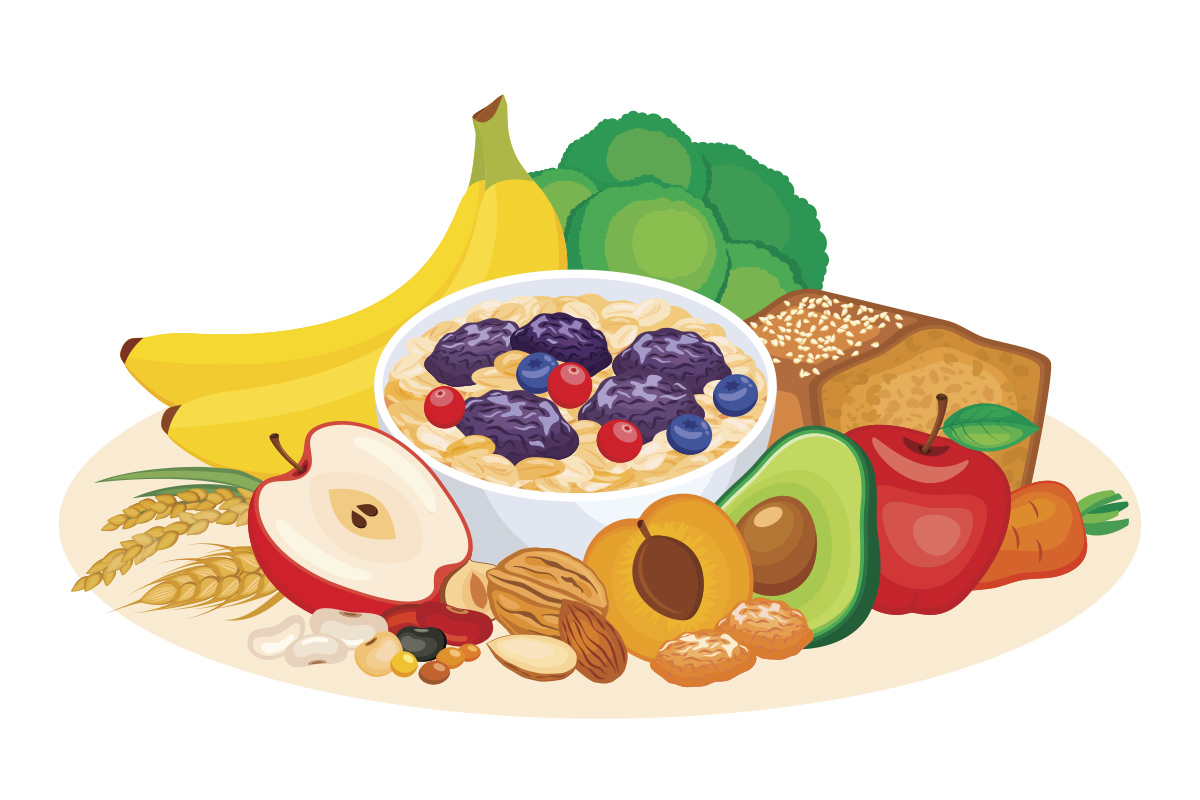
Fruits, such as berries, pears, apples, and bananas
Vegetables, such as broccoli, green peas, carrots, potatoes, and Brussels sprouts
Whole grains, such as oats, barley, quinoa, and rye
Legumes, such as beans, lentils, and chickpeas
Nuts and seeds, such as almonds, pistachios, chia seeds, and flax seeds
Eating more fiber can be as simple as snacking on berries and nuts; mixing chia seeds into smoothies; adding beans to soups; and serving a helping of veggies with dinner. While experts recommend getting fiber from eating a wide variety of whole foods, supplements can help you meet your fiber intake if needed.
Rachel Studebaker is a graduate of Lee University, where she earned a Bachelor of Arts in English with a minor in advertising with the distinction of summa cum laude and served as editor-in-chief of the university’s biannual magazine, The Vindagua. After graduation, Rachel joined CMC Media & Marketing Group as an editor. Today, she serves as managing editor and is responsible for leading the editorial team in the development and completion of content for 17 publications involving health & wellness, business, sports, and lifestyle published in print and online for HealthScope® and CityScope® magazines as well as Choose Chattanooga® and Choose Huntsville® – premier publications serving Southeast Tennessee, North Georgia, and North Alabama. In addition to writing, editing, and coordinating copy, Rachel oversees networking and reputation management for the company’s publications. In her free time, she enjoys reading, hiking, attending concerts, trying new restaurants, and traveling with her husband.
HEALTH
BEAUTY & STYLE
LIFE
RELATIONSHIPS
FOOD
FITNESS
PERSONAL GROWTH
ABOUT US

HEALTH
BEAUTY & STYLE
LIFE
RELATIONSHIPS
FOOD
FITNESS
PERSONAL GROWTH
ABOUT US
HEALTH
BEAUTY & STYLE
LIFE
RELATIONSHIPS
FOOD
FITNESS
PERSONAL GROWTH
ABOUT US
HEALTH
BEAUTY & STYLE
LIFE
RELATIONSHIPS
FOOD
FITNESS
PERSONAL GROWTH
ABOUT US
HEALTH
BEAUTY & STYLE
LIFE
RELATIONSHIPS
FOOD
FITNESS
PERSONAL GROWTH
ABOUT US
HEALTH
BEAUTY & STYLE
LIFE
RELATIONSHIPS
FOOD
FITNESS
PERSONAL GROWTH
ABOUT US
HEALTH
BEAUTY & STYLE
LIFE
RELATIONSHIPS
FOOD
FITNESS
PERSONAL GROWTH
ABOUT US